Purpose & Scope
The objective of the workshop was to introduce students to the fundamentals of Artificial Intelligence and Machine Learning while providing practical exposure to AI tools, real-world applications, and industry experience.
It aimed to bridge the gap between theoretical knowledge and hands-on implementation, enhance students' skills in emerging technologies, and encourage their interest in AI-based projects, research, and industry-oriented practices.
Resource Person
Mrs. Akshatha Chandrakant
CEO, JupiterKing Technologies Pvt. Ltd., Mysore
An expert in Artificial Intelligence and Machine Learning with extensive industry experience. Known for delivering practical, industry-oriented training, helping students bridge the gap between theory and real-world applications.Dignitaries Present
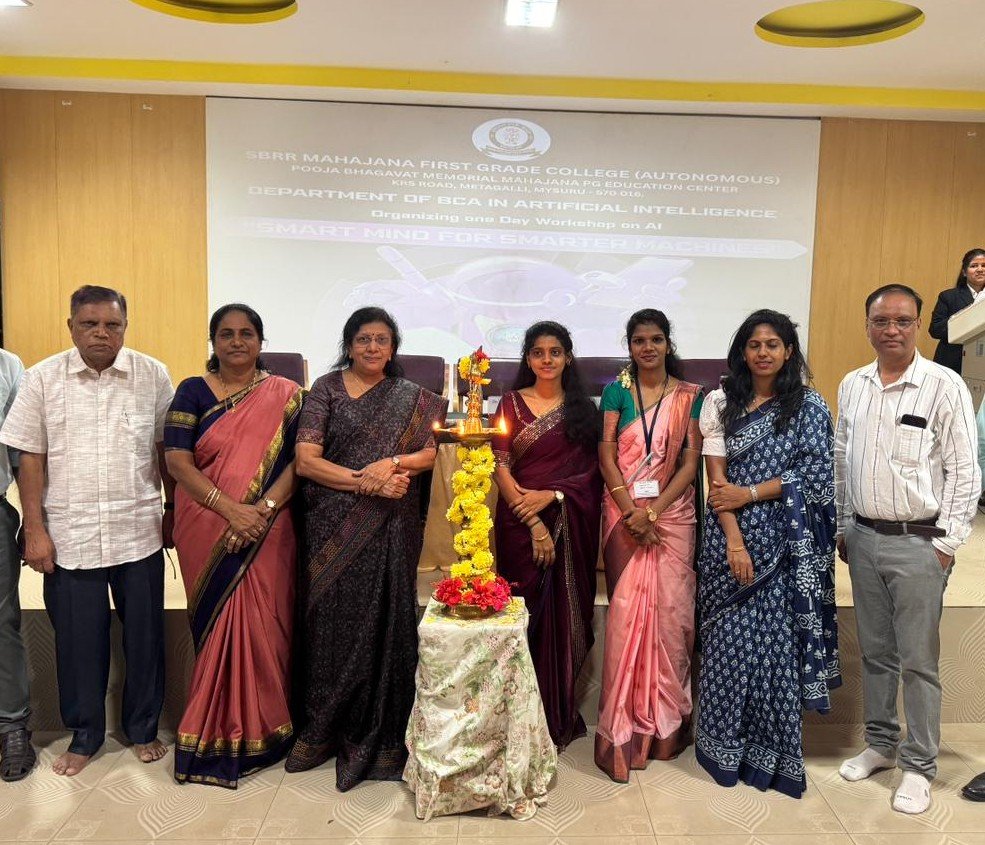
- Dr. T. Vijayalakshmi Muralidhar — Hon. Secretary
- Dr. C. K. Renukarya — Director, PBMMEC
- Dr. B. R. Jayakumari — Principal, SBRR Mahajana FGC
- Dr. Jagadeesh Krishna — Associate Professor & Head, Dept. of BCA (AI)
- Mr. Raghunandan B — Industry Expert in Robotics and AI
Session 1 — Forenoon Session
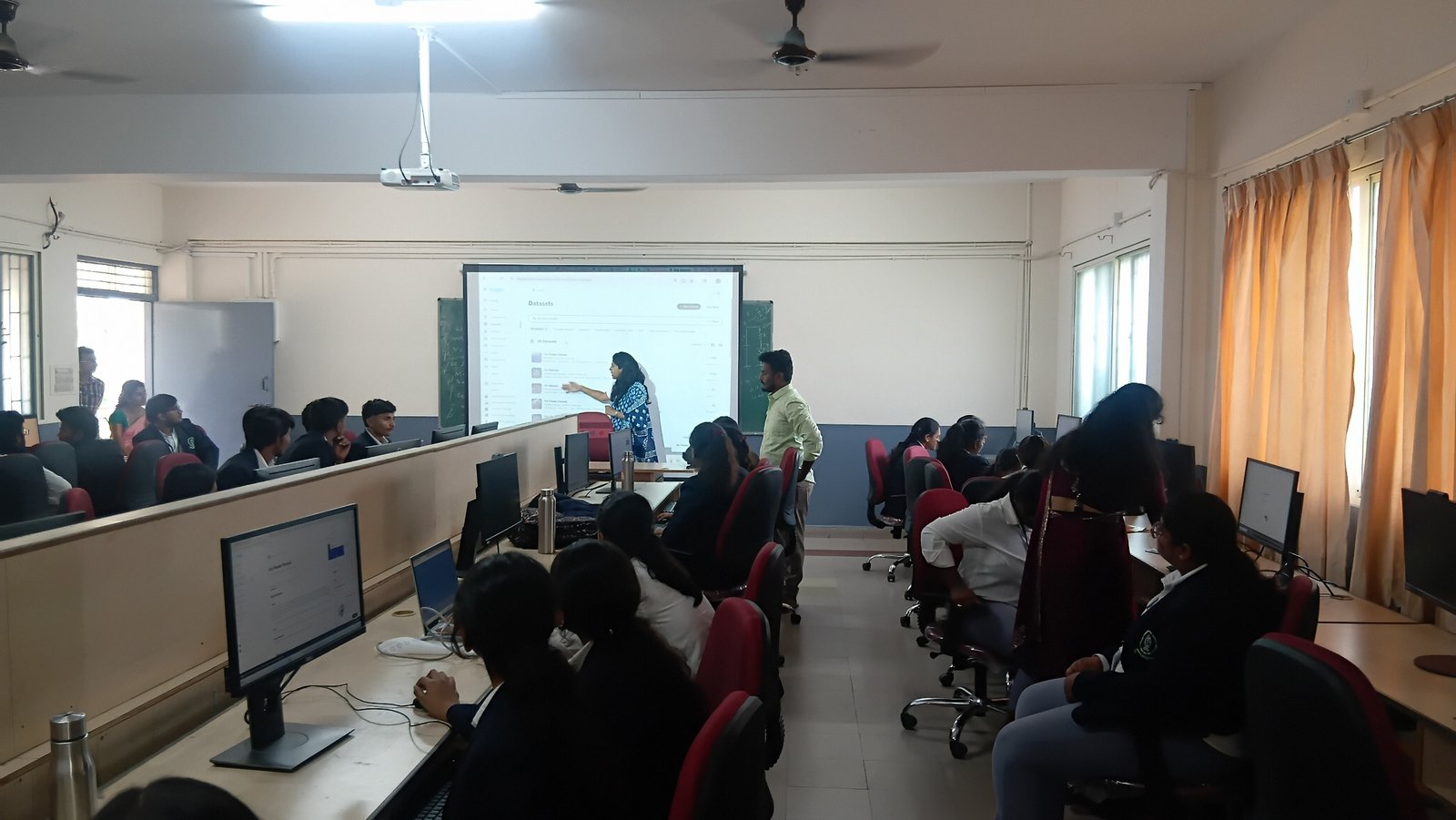
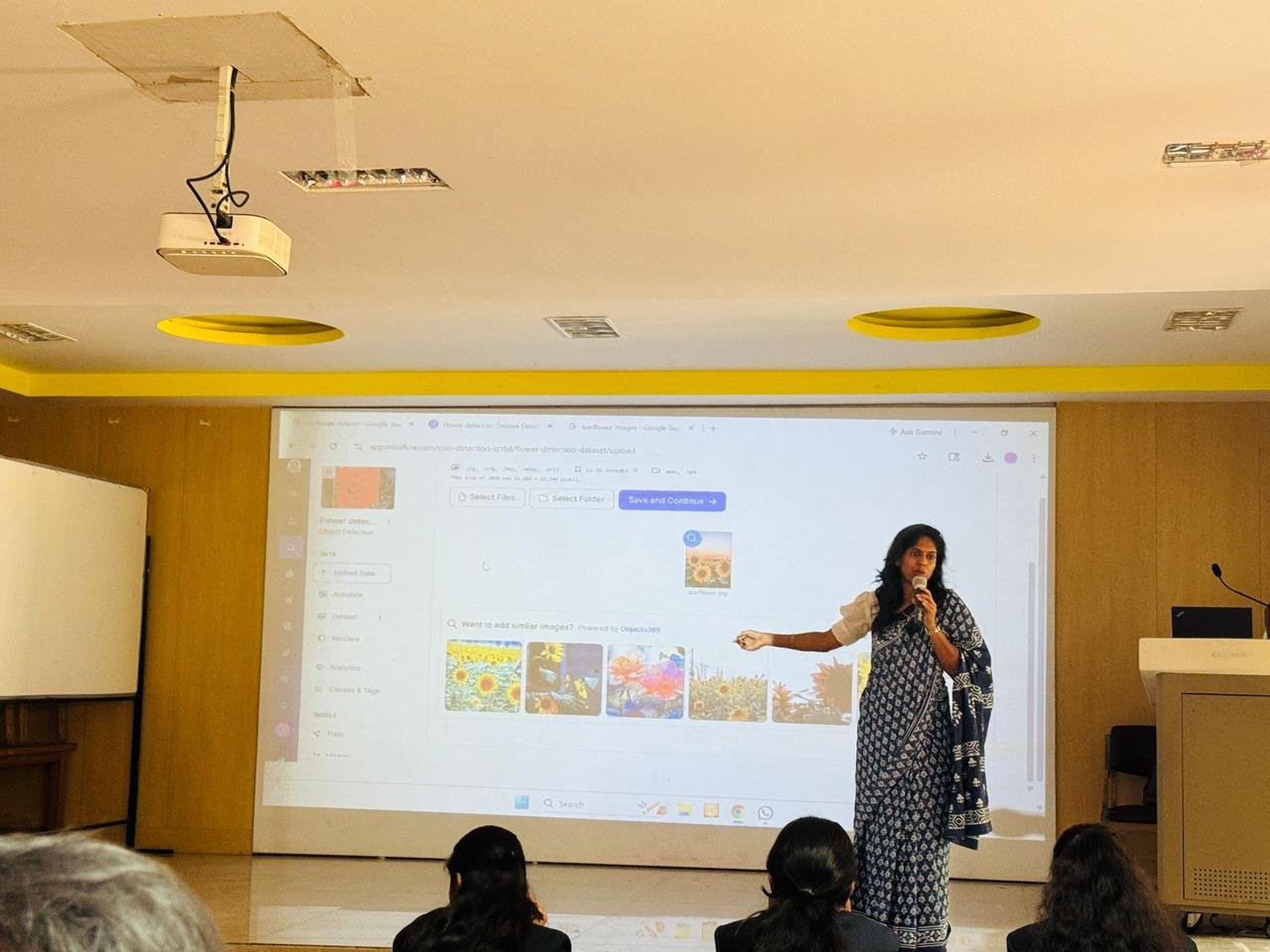
The first half focused on supervised machine learning with a special emphasis on computer vision workflows. Participants were introduced to Roboflow — a platform for data annotation, dataset management, and model training pipelines.
They learned how annotating images helps in creating labeled datasets, which form the foundation of supervised learning. Participants were also introduced to Kaggle, which provides access to publicly available datasets and GPU-supported notebook environments.
Session 2 — Afternoon Session
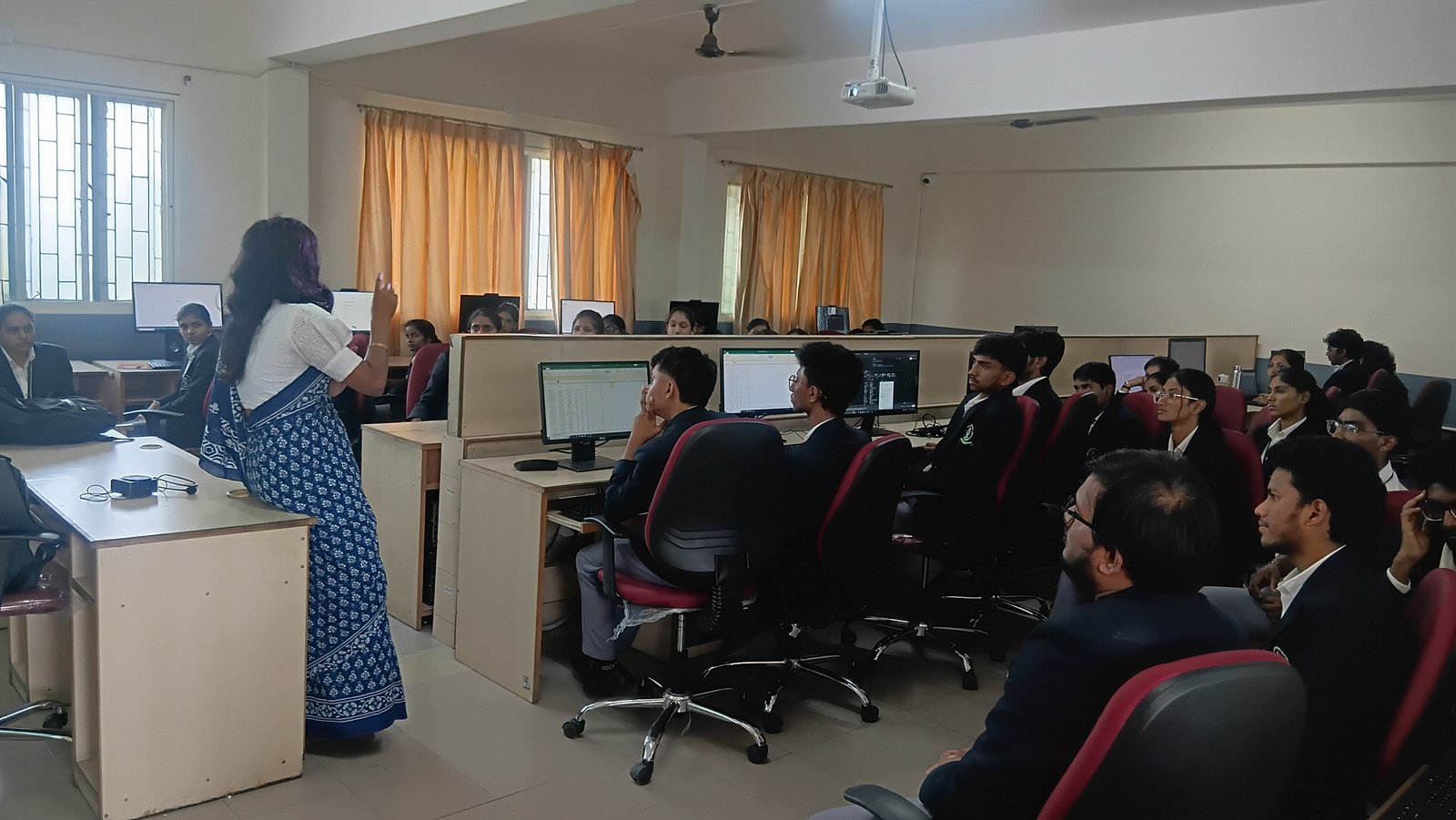
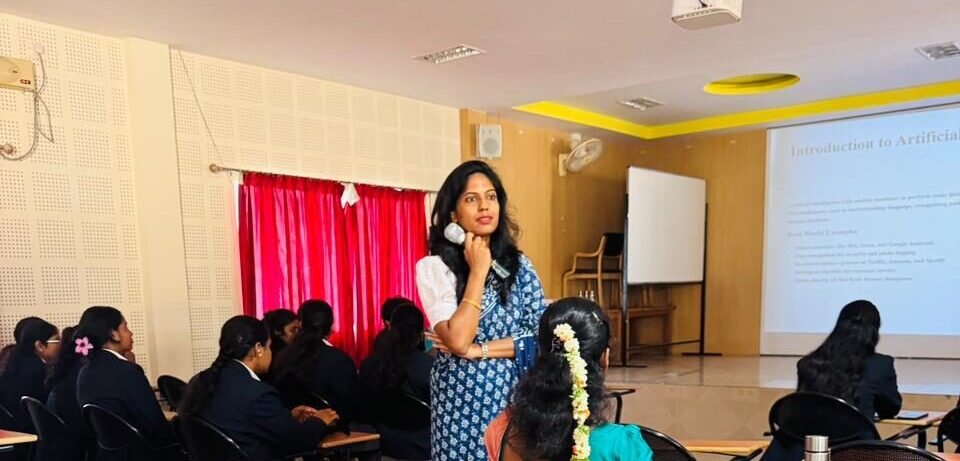
The second half focused on how a trained machine learning model reaches the end user through full stack integration. The session covered the basics of HTML and CSS for frontend development and introduced Flask as the connecting layer between the frontend and the ML backend.
A practical demonstration was carried out using the Bangalore House Price Prediction and Iris flower datasets. Participants learned how to train a regression model, serialize it using Python's pickle module into a .pkl file, and deploy it within a Flask application to serve predictions.